

Dental implants in people who have toothache
Dental implants in people who have bruxism implants
Introduction - bruxism implants
If you have a toothache or you constantly tighten your teeth, you will gradually get dental problems over the years. Pressing and rubbing the teeth causes the teeth to be shortened and tooth sensitivity. Also, the balance of the byte collapses and the contact of the teeth is inconsistent.
This condition causes headaches, severe jaw pain and other problems in the mouth and teeth. Tooth brushing and tooth erosion also causes tooth piercing and tooth erosion. In these cases, it is possible to solve the problem by overlaying it. Another problem experienced by people with toothache is the loss of a prosthesis or tooth that should be replaced by an implant. And as you know, the implant is the best replacement for the missing teeth.
People who have toothache problems face many problems if they want to fill their teeth, because the toothache has a lot of pressure on the artificial prosthesis inside the mouth and damages it. This also applies to dental implants and increases the likelihood of failure.
What is the graft? - bruxism implants
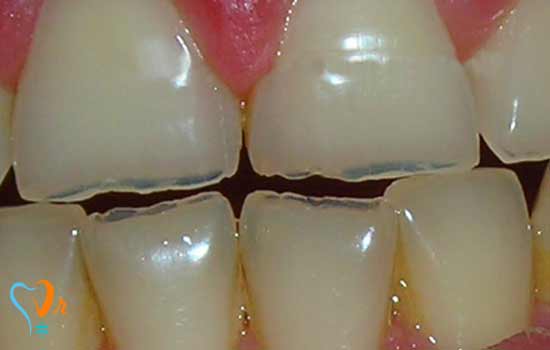
Grafting is an unintended habit in which a person bends his teeth together or pushes his jaws tightly at bedtime. This habit makes the teeth suffer from excessive pressure and prone to cracking, filling, or fracturing. The teeth are also touched and shortened (figure above), so that in some cases the central part of the tooth, which contains blood vessels and nerves, is referred to as the pulp.
Dental implant implant in toothache patients - bruxism implants
Although the titanium base of the dental implant is very sturdy and durable, but the toothache can cause serious damage to other parts of the implant, such as lining and abutment. In implant implant surgery, a titanium-like screw is placed inside the jaw bone to act as an artificial denture root.
After the jaw bone has been welded to the implant base (a process that takes several months), an abutment can be made and then an artificial denture (bridge or overlay) is installed on the implant. In a few months, waiting for the jaw bone to be implanted, you can fill the tooth with a temporary prosthesis but you can not eat it.
The implant has a beautifully functioning natural tooth and is very successful, but no treatment can be expected without the possibility of complications or consequences. Implant implantation complications may occur during or after surgery. One of the factors that increases the likelihood of an implant's failure is improper oral habits such as tooth decay.
Toothbrush complications in tooth implant implantation - bruxism implants
The teeth can interfere with the process of implant ingrowth to the jaw bone. The key to the success of the implant implant surgery is the success behind the process of implant implantation in the jaw bone, which is called bone integration. This is especially important in the first few months after surgery, because the implant has insufficient stability and the slightest movement can disrupt the bone integration process.
If you have permanent teeth, you may have difficulty in bone integrity, and therefore no tight bone graft between the implant and the jaw bones can be created. Blade can reduce the life span of the implant. Dental implants, like most prostheses, are not lifelong, but with proper care it grows so long that it can be considered lifelong. However, restoration on the implant (lining, bridges, or dentures) has a short life span and should be replaced after a while (five to 10 years).
It has a moderate life span when it comes to proper care and wear and tear, but if you have severe teeth, the wear and tear of the prosthesis will increase dramatically and reduce its longevity. The same way that the toothbrushes cause tooth enamel and tooth decay, this has the same effect on the prosthesis on the implant, causing cracking, filling, or fracture, and rubbing it.
Protecting Implants Against Toothbrush - bruxism implants
If you're having toothache and jaw problems, you can fix this. After teething, you can protect your teeth by making nocturnal mouth protectors or knit guards. The mouthpiece is a plastic plate that is made on the basis of your oral mucosa, covering the surface of the teeth and preventing rubbing them.
Can an implant be implanted with teeth? - bruxism implants
The problem with toothbrushes is often associated with stress, so the surgeon may advise you to take stress management techniques and control your thoughts and stress. In addition, people who have had an implant beforehand should protect and care with oral care during sleep. People who want to apply an implant can also protect their implants and their natural teeth.
However, one of the solutions is the use of innovative materials known as Zirconia.
The main reason for the failure of the implant in teeth patients is that the implanted dentures on the implant are usually made of acrylic or ceramic. Although these materials are toothless and have a natural appearance, they are vulnerable to pressure and the likelihood of filling, breaking and rubbing them over time is higher. However, restorations made from zirconia are more durable and highly resistant, so it may be better to use this material as an implant repair for teeth patients.


People who viewed this page also visited:
What are the dental implant treatment stages?
Implant Professional Center in Tehran
The best implant expert in Tehran
The best implant center in Tehran
What is immediate loading of dental implants?
Implant problems and implications
Force direction and its relationship with the implant body design
Unsuitable cases for dental implant
The geometry of the implant and its relationship with occlusal forces
The relationship of the implant body and functional surface