

Dental Implant is not a Tooth part 1
Dental Implant is not a Tooth
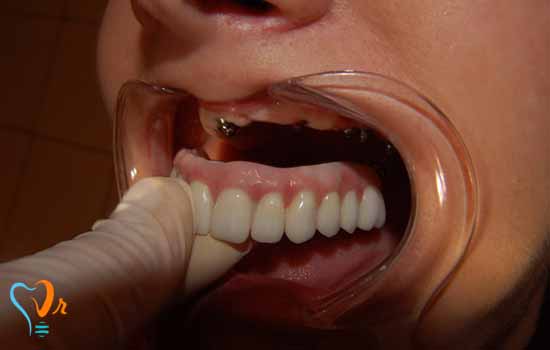
The function of a dental implant is dependent on its prosthesis, such as the crown and root of the tooth. The implant is evaluated and treated similar to a normal tooth, meaning the implant is scanned and probed around the gingival fiber implant, but its fibers are different from the fibers around the tooth.
In this topic, the following are compared in natural teeth and implants:
Longevity - Pain - High stability stability - Percussion - Crystalline bone resorption - Radiographic evaluation - Adhesive tissue - Probing depth - Bleeding index - Peri-implant disease - Implant failure
Longevity - Pain - High stability stability - Percussion - Crystalline bone resorption - Radiographic evaluation - Adhesive tissue - Probing depth - Bleeding index - Peri-implant disease - Implant failure
But implants are fundamentally different from teeth: implants do not rot, have no nerve, and implants do not have gingival fibers. Lifetime: Implant shelf life alone is not a criterion for evaluating the implant system, and implant prosthesis should be evaluated over the long term. The success rate of implants at 5 years is 85% and at 10 years 90%. This is similar to the success of dentures in normal teeth. In fact, the shelf life of the implant and its prosthesis should be evaluated together because the patient views the implant prosthesis as the most important part of the treatment.
The next case, which is compared in natural teeth and implants, is the subject of pain. Pain tissues, tenderness, painful swelling, are common complaints in dentistry. Pain and painful swelling are criteria that depend on the patient's interpretation of the degree of discomfort. A tooth is susceptible to heat and cold which indicates a bug, but the tooth implant is not sensitive. Is. When the implant reaches the initial healing stage, the lack of pain under horizontal and vertical forces is a primary subjecdive measure. Precision and forceps up to (500 gr) (1.2 psi) are used to clinically evaluate tooth or implant pain or discomfort. Usually (not always) the pain does not develop unless the implant is loose and surrounded by inflamed soft tissue, or is strong in vibration or force but has damaged a nerve.
The most common form that causes discomfort in the implant is when a loose abutment is pressurized at the site of the implant-implant part of the soft tissue. Discomfort disappears when the soft tissue in the area is removed and the abdomen becomes firm. But if the implant-implant attachment is firm but the pain persists, the implant body fracture is considered a (very rare finding) criterion for detecting implant pain after implantation (or chewing) from one Ten patients score pain. Number one represents mild pain and number ten is the worst pain the patient has experienced. When the patient reports a pain intensity of more than 5, the dentist should consider carefully the removal of the implant. Pain in implants with tight fixation is rare and is considered a primary problem, whereas pain in an implant can occur in the early or late stages of treatment. In fact, this problem rarely gets better. Pain at implant loading Most often occurs at immediate implant loading and is usually not seen in implants with normal healing and prolonged time under operation.
Slit (tooth and implant movement)
Under normal conditions, the tooth has physiological motion in horizontal, vertical and rotational directions. The amount of these movements depends on the surface and the shape of the roots so the length of the root, diameter, shape, number of roots, position and health of the gingival fibers attached to the teeth affect the tooth position. The vertical tooth position is zero in the vertical direction. An implant has a vertical motility under ib 10 between 2 and 3 μm due to the bony properties of the sub-implant.